Pier and Beam Foundations Building, Cost, & Problems
Table Of Content

Some individuals prefer round piers in the middle of a building but rectangular or square ones at the corners. Typically, beams are sized to accommodate the joist framework of the construction. Yes, due to the complexity of a pier and beam foundation they are almost always significantly more expensive than a slab foundation. The type of foundation, materials, labor, permits and the extent of damage all influence the final cost of foundation repair.
Pier and Beam Foundation Services and Costs
How to Build a Cabin - Forestry.com
How to Build a Cabin.
Posted: Thu, 06 Jul 2023 07:00:00 GMT [source]
Use the level and plumb line to make sure the entire pier system is level and perfectly vertical.
Los Angeles' Top Foundation Repair & Drainage Contractor
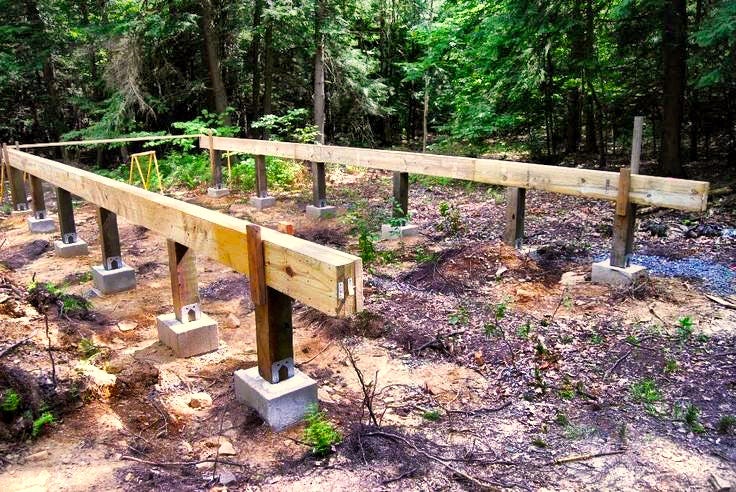
Then, you’ll install the beams’ mounting hardware before the concrete hardens for optimal bonding strength. The most used hardware is the simple metal L-bracket to secure wooden beams with screws and bolts. However, there are numerous other designs available with somewhat different functions. Once the piers are done, you can lay the 2x6-inch lumber in a frame, on end, to create your joist system. They will span across the floor plan of your home, as well as frame the edges.
Pier and Beam Foundation Cost
These are often necessary when the soil around your home is too soft to support the weight of your foundation. Pier and beam foundations are made up of two main elements— the piers and the beams. The piers are usually made of concrete, although they can also be made of brick, stone, or wood.
It’s important to adhere to local regulations and safety guidelines throughout the excavation process. Now that the site is prepped, we can move on to the next step – digging the foundation holes. Now that you have all the materials and tools prepared, let’s move on to the first step of building a pier and beam foundation – site preparation. These are often considered the “big three” in terms of foundation failure.
How to Keep Your Pipes From Freezing (And What to Do if They Freeze Anyway) - CandysDirt.com - CandysDirt.com
How to Keep Your Pipes From Freezing (And What to Do if They Freeze Anyway) - CandysDirt.com.
Posted: Mon, 15 Feb 2021 08:00:00 GMT [source]
Dampness in your pier and beam foundation isn’t a primary concern compared to the rot that can develop with time. Therefore, there’s a risk that your home’s structure will fail, leaving you with tens of thousands of dollars in repairs to pay for. While most people don’t buy or construct a property with the idea that they’ll eventually uproot and relocate it, pier and beam construction makes that possibility a real one. By lifting the house above the ground, this foundation provides simple, unrestricted access to the underside of the home. The cross-sectional dimensions or diameter of piers span 6-16 inches and vary according to the load being supported.

They were easier, less expensive, and quicker to build than a full dug-out foundation, and used fewer materials. They were also more stable and longer-lasting than building directly on the ground. Pier and beam foundations typically have an 18” or higher crawl space under them for ease of access to plumbing and electrical connections. In this guide, we’ll explain what a pier and beam foundation is, how to design one, pier and beam spacing, and the advantages and disadvantages of this type of foundation. We’ll also discuss how to build the foundation, the costs, and possible problems, and repair costs.
What Are Pier and Beam Foundations?
One 8” diameter 48” tall concrete pier uses 5.65 ft³ of concrete, and a 12” diameter pier the same height uses 12.6 ft³. So, you could pour almost five 8” piers with a cubic yard of concrete, but only two 12”. Once the piers are in place, backfill the holes around the piers, and tamp the fill well.
For rainy climates or land that is downstream from large bodies of water, pier and beam foundations can help prevent water from entering your home. The first two wooden posts are fixed on the plot, as described in step 2, and the construction string is tied between them. After you have readied the land and marked the perimeter, as described above, you can begin digging the holes for your foundation.
A plumb bob helps ensure that the structure you are building is perfectly vertical. Then, over the internal joist piers, install lumber pieces parallel to each other by nailing them onto the piers using the angle cleats, and also to the wooden beam at the ends. Do this for each line of joist piers, to finalize your floor-joist system. One important thing to keep in mind is that, all the piers need to be at the same level, that is, at the same height above the ground surface.
The cost of a pier and beam foundation is usually determined based on the size of your home and the number of piers required. Construction of a pier and beam foundation involves using sturdy concrete blocks and wood beams, making it less expensive and easier to build compared to other complex foundation types. As with almost any foundation, pier and beam foundations may experience problems over time, especially if they weren’t built properly. However, those built on solid ground with proper drainage and maintenance can last centuries.
Structural engineering is the use of applied physics and mechanics to analyze and design man-made structures or objects to safely resist the loads imposed upon them. Shallow foundations are susceptible to seasonal movement from rainfall, drought, freeze/thaw cycles, temperature changes and transpiration of moisture thru the roots of large plants and trees. That’s why the soil beneath your home is often referred to as your second foundation. Once completed, you will have a perimeter boundary for your project, which can help keep the construction work squared and symmetrical.
When it comes to building a new home or repairing an existing one, a foundation is, well, foundational—it’s one of the most important elements to consider. The foundation provides the base to support the entire structure, and its stability is critical to the longevity of the house. Pier and beam foundations are becoming a popular choice among homeowners looking for a solid, stable base for their house while permitting easy access to the crawl space underneath. Pier and Beam Foundations, as the name suggests, are concrete footing and piers which support wood beams and floor joists.
Before filling the top with concrete, the level of the form is done according to the design of the floor. Anchor bolts will be fixed to the support beams on the floor of the pier. There are few steps to build a pier and beam foundations are given below.


Comments
Post a Comment