Building a Sturdy Pier and Beam Foundation
Table Of Content
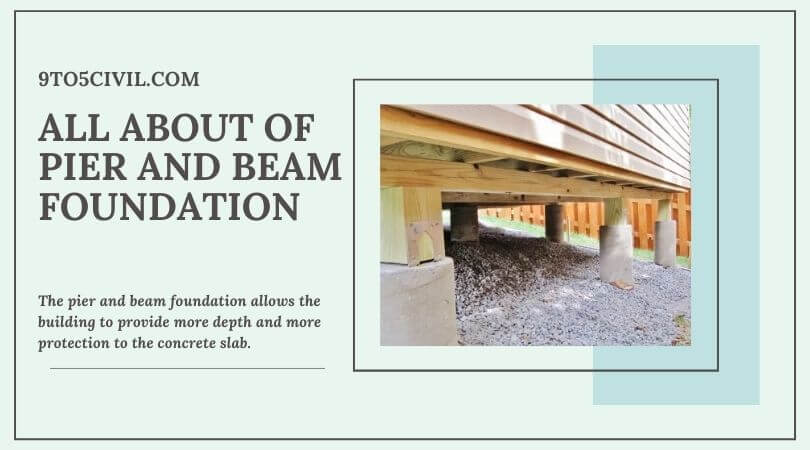
Once the beams are in place, the final step is to backfill the excavated area around the piers with dirt. Then, the area around the foundation must be graded so that water drains away from the home. Finally, any landscaping that was disturbed during excavation can be replaced.
Pier and Beam foundation Design step, Building process, Cost, Problems
The crawl space of the pier and beam has about 18 inches to 22 inches from the home. This space can be used for electrical wiring as well as plumbing for water and gas. Proper maintenance is crucial for ensuring the longevity and stability of a pier and beam foundation. One important aspect of maintenance is to have a well-designed drainage system in place to prevent water from pooling around the foundation. This helps to provide additional support and stability to the foundation. The surrounding area is then graded to ensure proper drainage, preventing water from pooling around the foundation.
Step IV: Mounting
In this article, we will guide you through the step-by-step process of building a pier and beam foundation. We will discuss the materials and tools needed, as well as each stage of the construction process, to ensure that you have a solid foundation to build upon. But it’s important to weigh the pros and cons before deciding on which type of foundation is right for you. Consult with a professional like Perma Pier, who is highly experienced in both pier and beam installation and repairs.
Foundation Repair Timing
The clay will expand when wet and contract when it dries out, which can put a lot of stress on your foundation. If you have trees near your home, their roots can also damage the foundation as they grow and expand. Professionals will likely suggest underpinning when the piers around your home begin to collapse, and simple repairs won’t do the trick. Underpinning involves driving helical or push piles below the foundation until they reach more stable ground underneath.

Metal, wood, or synthetic shims, or adjustable beam mounts are often used to level the connection between pier and beam. The beams form an interconnected and level grid upon which the structure’s joists and subfloor are placed or built. Pier and beam foundations are used in all facets of the building industry, from sheds and decks, to cabins, homes, barns, garages, and even high-rise office buildings.
Should you insulate under a pier and beam house?
How Much Do Helical Piers Cost In 2024? - Forbes
How Much Do Helical Piers Cost In 2024?.
Posted: Wed, 25 Jan 2023 19:30:06 GMT [source]
Continue this all the way around, making constant adjustments to ensure that they are level. You do not need any concrete or mortar as the weight of your home on top of them will keep them in place. The cost of a pier and beam foundation varies depending on the specific circumstances of the project, but it can be generally less expensive than a crawl space foundation. A home’s foundation is in direct contact with the ground and the building’s structure sits on the underlying zone of soil or rock.

After completion of the 6th step, you will be looking at a sturdy pier and beam foundation, made entirely by you. If you have successfully completed these 5 steps, you can truly give yourself a well-deserved pat on the back. The hard part is over, and now, all that remains is to use the lumber pieces to build the beams and joists. If any of the piers become tilted then it may cause uneven settlement of foundation and cause cracks in the beam. This can be achieved by redirecting downspouts away from the house and ensuring that the yard is properly graded to allow water to flow away from the foundation. Regularly inspecting and cleaning the gutters is also essential to prevent water overflow.
How to Build and Level a Deck Beam - Fine Homebuilding
How to Build and Level a Deck Beam.
Posted: Wed, 21 Jan 2015 08:00:00 GMT [source]
Depending on the damage, repairs could be as simple as replacing one beam or an extensive re-build of the wooden foundation. This can be an expensive process costing between $4,500 and $10,000 depending on the amount of damage. Basement foundations are built at least eight feet below the ground to accommodate an underground living space. For maximal support, the structural foundation walls are placed on concrete footings that run the perimeter of the basement. These footings are placed 12 inches below the soil and at least 12 inches below the frost line.
Pier and Beam vs Concrete Slab Foundation: Which Is Better?
This design allows for better ventilation and easier access to plumbing and electrical systems. A pier and beam structure rests on piers that provide a deep foundation, while a slab rests on the ground or on a gravel pad. The piers raise the floor above ground level and the slab is either level with the ground or the surface is 3” to 6” above it. Many structures on piers have wooden floors which are easier on the feet, shins, joints, and back than concrete floors. The raised floor also provides easy access to plumbing and electrical connections and makes repairs much easier too.
Ensure that you have all these materials and tools ready before you begin the construction process. This will save you from unnecessary delays and allow you to work efficiently. Settling could result in bouncing or sagging flooring, stuck windows or doors, and rolling toys.
Add in the sono tubes, rebar, adjustable beam brackets, and gravel, and the cost jumps to around $1,500. Lumber for triple 2×10 beams adds about $1,200 to the cost, bringing the full cost in under $3,000, or about $5.00 a square foot. Additionally, climatic issues such as frost, seasonal flooding, and wind loads may need to be considered too, as might seismic concerns.
Underpinning involves driving longer piers deeper down under the foundation until they reach strong enough soil to properly support the structure. Your foundation is in direct contact with the ground and links the building’s structure to the underlying zone of soil or rock. The foundation transfers the structure’s load to the underlying soil or rock while avoiding excessive settlement or movement. While wood may not be the most intuitive choice for a house’s foundation, it is actually a relatively popular type of foundation for many home builders.
Structures generally have a dead load of per square foot (PSF) and a live loading of about 40PSF, giving a combined loading of 50-60PSF. Choosing the pier’s shape, be it rectangular, square, or round, and the dimensions according to the building’s dimensions and weight is also essential during the design phase. Corinne Tynan is a highly skilled contributing editor at Forbes Home, with a wealth of knowledge and expertise in various areas such as interior design and home improvement. To deal with moldy beams, you will need to extract the problem sections and replace them with new wood. You will also likely need to do some shimming to re-establish the strength of your home’s foundation. Alora Bopray is a digital content producer for the home warranty, HVAC, and plumbing categories at Today's Homeowner.
This pro will provide an estimate when you discuss the details of your project in person. The below California code states that all exterior walls need to have a continuous footing. A business process or business method is a collection of related, structured activities or tasks by people.


Comments
Post a Comment